
Independent transport guide
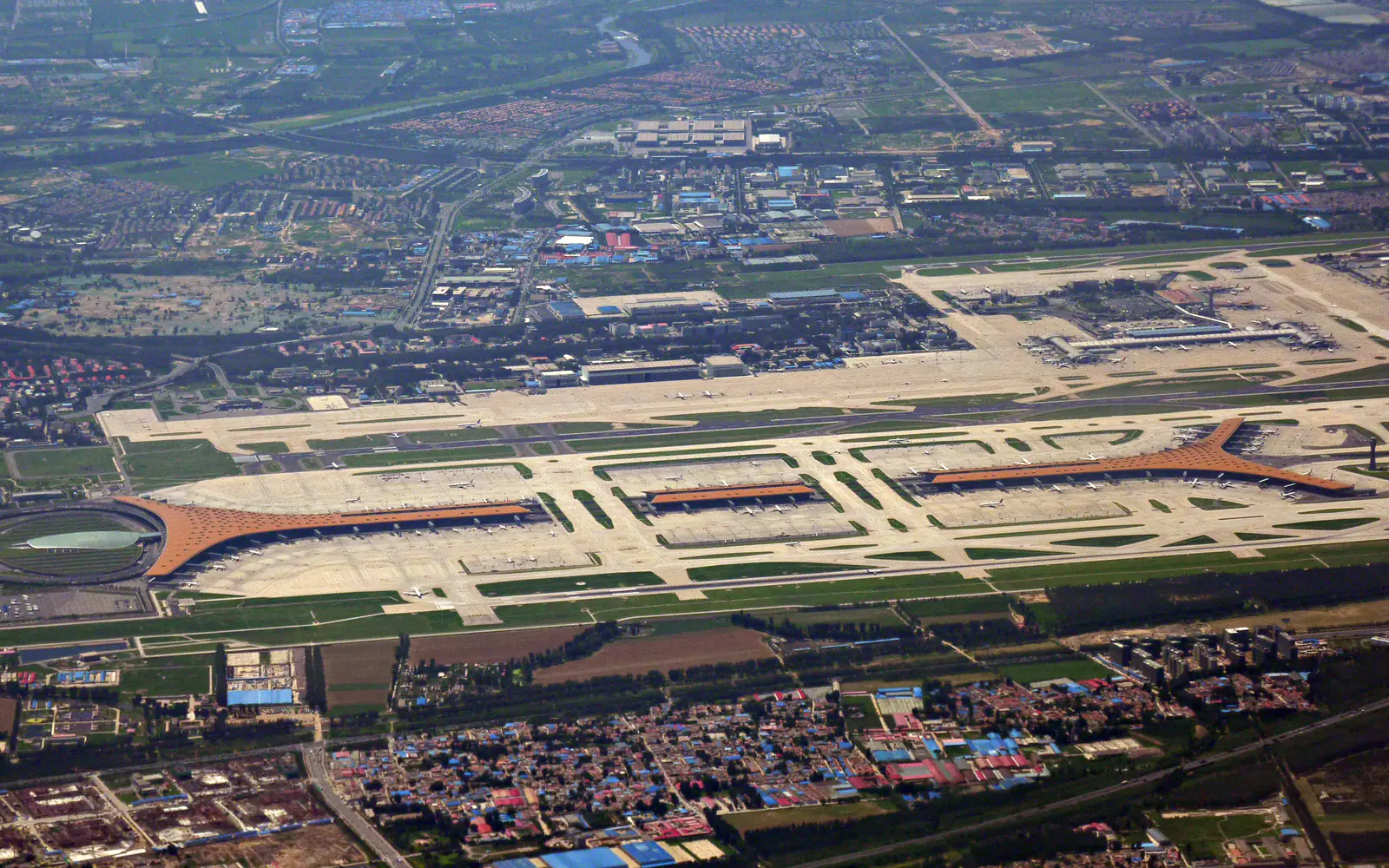
Beijing Capital International Airport
北京首都国际机场Běijīng Shǒudū Guójì Jīchǎng
Beijing Capital International Airport is the northeastern gateway coded PEK. A calm departure starts by checking both the airport code and terminal, then choosing rail or road according to luggage and the time of day.
Airport
Before you leave
Your airline's official app, website or flight message
Recheck the terminal and check-in deadline the day before departure
Preparation steps
- 1
Match the booking to airport code PEK; do not rely on the city name alone.
- 2
Confirm T2 or T3 and whether your airline offers online check-in.
- 3
Save the flight number, terminal and airline contact details offline.
Original passport, visa or transit documents when applicable, and any onward-travel evidence requested by the airline.
If the terminal shown by different apps conflicts, treat the airline or airport's live flight information as authoritative.
About 3 hours for international departures
Departure walkthrough
Set the exact terminal as the rail destination or vehicle drop-off point.
Reach the assigned gate with enough time for any terminal train or long concourse walk.
- 1Step 1Choose the city transfer
Use the Airport Express when its operating hours and interchange suit your hotel; choose an official taxi, e-hailing car or airport bus when luggage or late hours make transfers difficult.
- 2Step 2Enter the correct terminal
Check the large terminal and airline signs before unloading bags or leaving the rail station.
- 3Step 3Check in and drop bags
Find the airline zone on the departure board, complete document checks and confirm the final boarding gate.
- 4Step 4Complete border and security checks
International departures may require immigration before security; keep electronics and permitted power banks easy to present.
- 5Step 5Walk or ride to the gate
Some gates are far from the main hall, so follow the gate number immediately after screening.
Timing advice
Allow extra time during morning and evening road peaks, public holidays and winter disruption; the airline's check-in deadline remains the hard limit.
Take the Capital Airport Express or an official airport bus, then follow your flight information to the correct terminal.
Arriving and getting onward
1
Capital Airport Express
Follow rail signs from T2 or T3 toward Sanyuanqiao, Dongzhimen or Beixinqiao, then transfer to the subway or a short car ride.
- Best for
- Predictable travel time with manageable luggage
- Watch for
- Check the final train and allow for long metro interchanges.
2
Official taxi or e-hailing
Use the signed taxi queue or the designated e-hailing pickup area for your terminal.
- Best for
- Families, heavy luggage and door-to-door travel
- Watch for
- Road time varies sharply at peak hours; ignore unsolicited drivers.
3
Airport bus
Choose the current official route by its downtown stop, not only by a familiar district name.
- Best for
- Late arrivals or hotels near a direct stop
- Watch for
- Routes and timetables change; recheck after landing.
Foreigner notes
They are not a practical walk apart with luggage. Correct a terminal mistake before leaving the rail platform or vehicle.
Travelers with luggage often find it easier to use the Airport Express for the long section and a short taxi for the final hotel connection.
International, domestic and self-transfer procedures differ. Do not infer baggage handling from the airport alone.
Avoid these mistakes
Do not build a tight self-transfer around optimistic immigration, baggage or cross-terminal times.
Checked 2026-07-31
Sources and evidence
Official
OfficialBeijing Capital International Airport passenger guidePublisher · Beijing Capital International Airport
Used forTerminals, airline services, airport transport and current notices
Checked 2026-07-31OfficialBeijing Daxing International Airport passenger guidePublisher · Beijing Daxing International AirportUsed forTerminal layout, check-in services and ground transportation
Checked 2026-07-31Community experience
Use airport-, station-, port-, border-authority- or carrier-specific official pages for live operations. City-level official references provide orientation only; community reports are used only for first-hand experience such as luggage, walking and passport lanes.
北京首都国际机场首都机场路11号