
Independent travel guide
Shibati Traditional Style Area
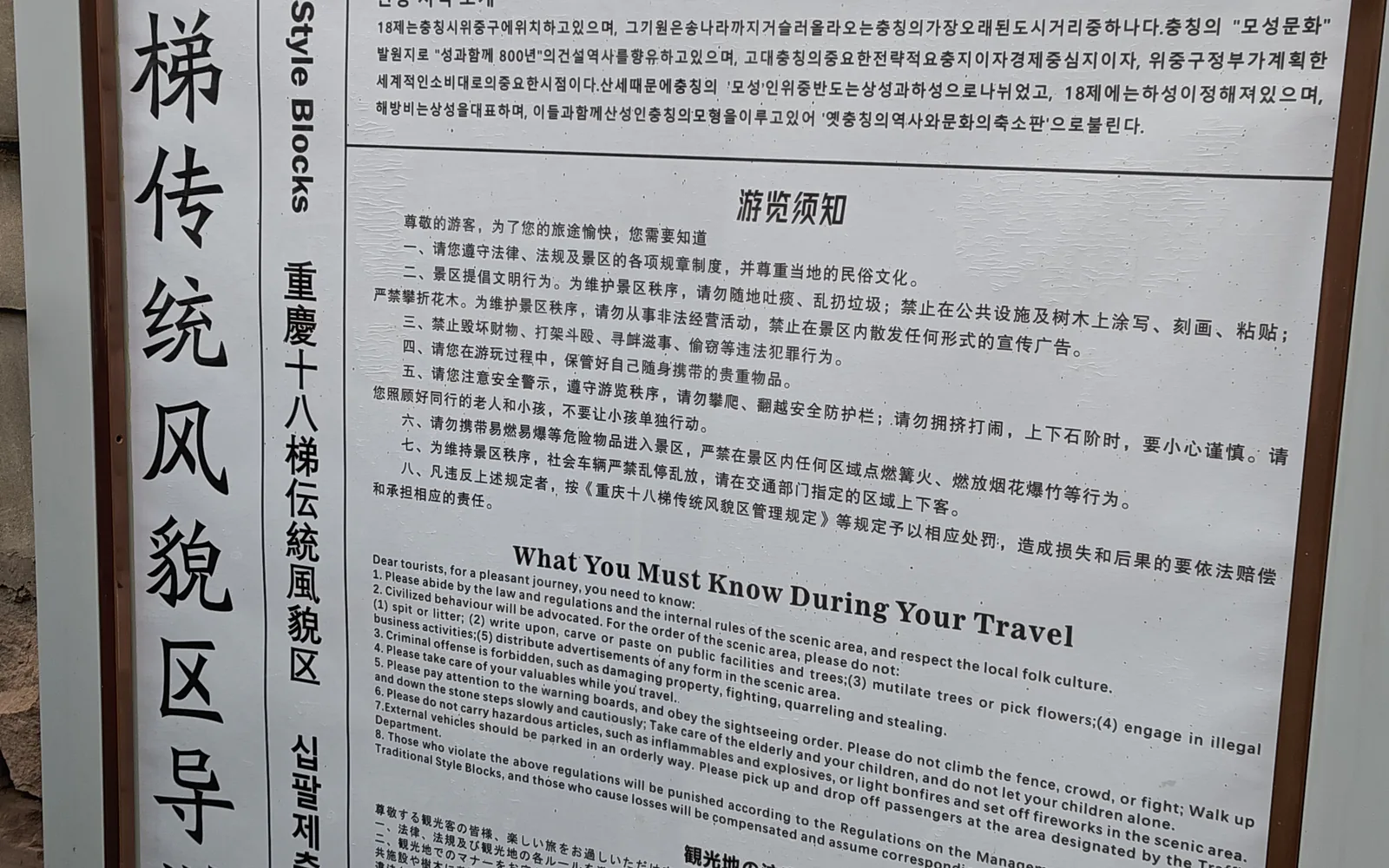
十八梯传统风貌区Shibati Chuantong Fengmao Qu
A renewed hillside quarter of stair lanes, traditional façades, small museums and food businesses below Jiefangbei. Allow 1.5–3 hours for the core visit. Save the named entrance in your map; the attraction centre may sit away from the gate.
Free exterior / paid elements · Checked 2026-08-02
Verified ticket prices
Official pricesFree public lanes; exhibition venues and shops are separate.
Adult admission
Public area is free; ticketed halls or activities have no confirmed current adult price- The official culture source supports free public lanes but not a unified adult ticket.
No reservation
How to book
Use the public Shibati area directly; exhibitions, shows and indoor paid projects may have separate operator rules.
No unified public-area reservation lead time is published.
Booking steps
- 1
Read the current official opening notice and distinguish the public historic area from indoor projects.
- 2
Use the Chinese entrance name 十八梯传统风貌区 and follow any current crowd-control signs.
- 3
For a separate exhibition or show, verify its own official ticket page instead of treating the street entry as a booking.
No passport rule is published for the public street area; carry the original passport if an indoor operator requests identity verification.
If a sub-venue is closed or full, continue in the public area and follow that venue's official notice for another date.
1.5–3 hours
How to visit
Begin at Shibati Traditional Style Area, walk the outer edge of Shibati Traditional Style Area first and only then enter the busiest commercial lane.
Leave Shibati Traditional Style Area from the side closest to the next stop, then follow the transport note: Use Jiaochangkou station and choose the exit signed for Shibati; expect many stairs. Walking the same lane back is usually the slow option.
- 1Stop 1Outer edge of Shibati Traditional Style Area
Start with the quieter edge: it gives the street, buildings and daily life around Shibati Traditional Style Area context before the busy lane takes over.
- 2Stop 2Main lane without rushing
Let the central lane at Shibati Traditional Style Area show you the rhythm of the place; save stops for details that survive a quick first pass.
- 3Stop 3Turn into one side lane
Use one side route through Shibati Traditional Style Area to find texture the shopfronts hide, but yield to residents and service traffic.
- 4Stop 4Photo stop with a reason
Choose one recognizable angle around Shibati Traditional Style Area, take the shot, and move on instead of collecting similar frames.
- 5Stop 5Eat or leave on the easy side
Use 1.5–3 hours as a flexible walk, then leave toward the next stop after checking the transport note: Use Jiaochangkou station and choose the exit signed for Shibati; expect many stairs.
Best time
Weekday morning, soon after opening. If you choose this window, put Shibati Traditional Style Area first and keep the rest of the route light.
Foreigner notes
For Shibati Traditional Style Area, save 重庆十八梯传统风貌区 and 中兴路1号(较场口地铁站出入口旁) in the map app; a broad venue pin may stop short of the visitor gate.
The cited official source does not establish a unified reservation for the public historic area; sub-venues are separate.
For Shibati Traditional Style Area, the usual crowd pattern is only a planning hint; check the day's notice and the queue at the gate.
No fixed gate hours are recorded. The public historic district has no unified last entry; indoor venues commonly operate about 08:30-20:30.
Save 重庆十八梯传统风貌区 and 中兴路1号(较场口地铁站出入口旁) before leaving; the last walk is easier when the gate is already marked.
Avoid these mistakes
The map centre for Shibati Traditional Style Area may not be the visitor gate; use the named entrance in the record.
Check the date and source on any old price or hours screenshot before using it for Shibati Traditional Style Area.
Keep a return buffer after Shibati Traditional Style Area; queues and internal transfers can consume it.
A city-level booking page may not cover every boat, show or cableway at Shibati Traditional Style Area; check paid sub-entries separately when relevant.
Continue nearby
Mountain City Trail2–3 hoursPeople's Liberation Monument at Jiefangbei30–60 minutes just for the monument; 2–3 hours including the pedestrian mall and Bayi Snack Street; 3–4 hours if extending to the Hongya Cave / Qiansimen Bridge night views.Hongya Cave1.5–3 hours, preferably across sunsetChongqing seasonal itinerary guideChongqing itinerary and seasonal travel guide for a 3 days; add 1–2 days for Dazu or Wulong first visit.Chongqing food guideIncludes spice, ingredient, allergen and ordering notes for independent travelers.Chongqing Travel Guide & MapChongqing travel guide and interactive map for independent travelers.
Sources and evidence
Published by China Trip Primer · Read the editorial and verification methodology
Official
OfficialShibati Traditional Style Area opening informationPublisher · Chongqing Municipal Culture and Tourism Commission
Used forPublic-area access and separate rules for indoor projects
Verified 2026-08-02OfficialOfficial or venue referencePublisher · Official or venue publisherUsed forOfficial visitor context or venue information; confirm that the page names this venue before relying on it for booking
Verified 2026-08-02Venue-specific official pages are used where available. City-level official references provide context and are not booking confirmation; editorial and community sources are used only for route choices, pacing and first-hand experience.
重庆十八梯传统风貌区中兴路1号(较场口地铁站出入口旁)